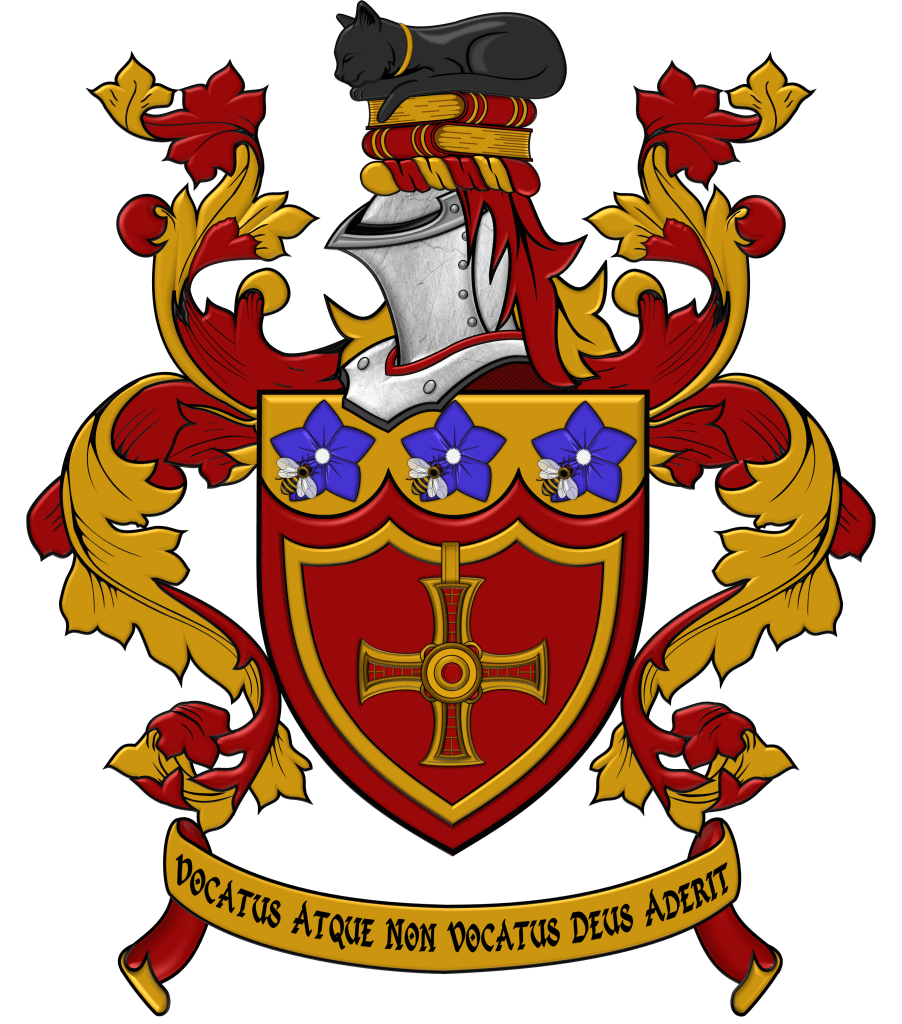
Ever since school days I’ve had a passing interest in heraldry. Indeed I was a founder member of the Barnard Castle School Heraldry Club (a very short lived organisation!)
A while ago I made application to the College of Arms, the heraldic authority for England, to be granted permission for a coat of arms, the Earl Marshall agreed the petition and procedures for granting began. The court herald allocated to me, Richmond Herald of Arms, was very kind and helped design and present the arms to be granted in accordance with the rules of heraldry.
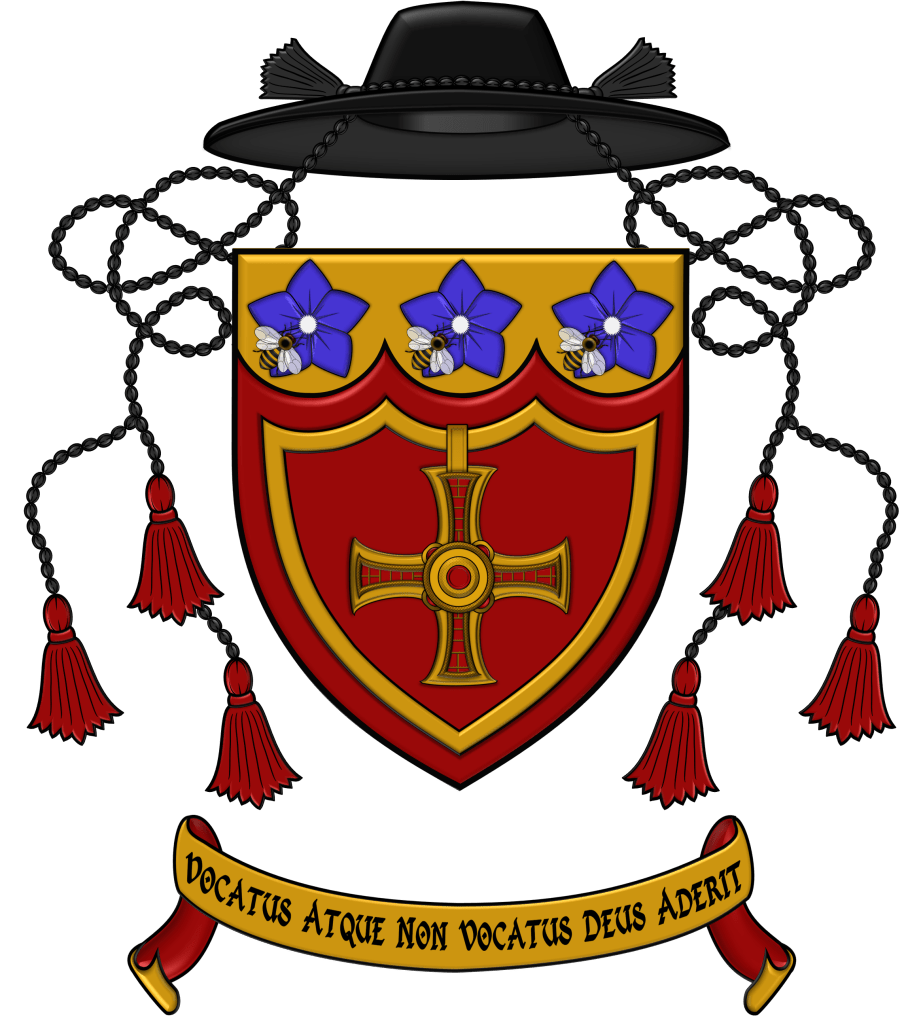
After due process I was granted my personal coat of arms and heraldic badges. There are two versions, recognising in one that I am a Canon of the church. A version of the arms is above.
The final ‘Letters Patent’ is the official confirmation of the granting and describes the arms and is being prepared and will be issued soon.
The granted coat of arms becomes my property and is inheritable property to my descendants and their descendants down the generations.
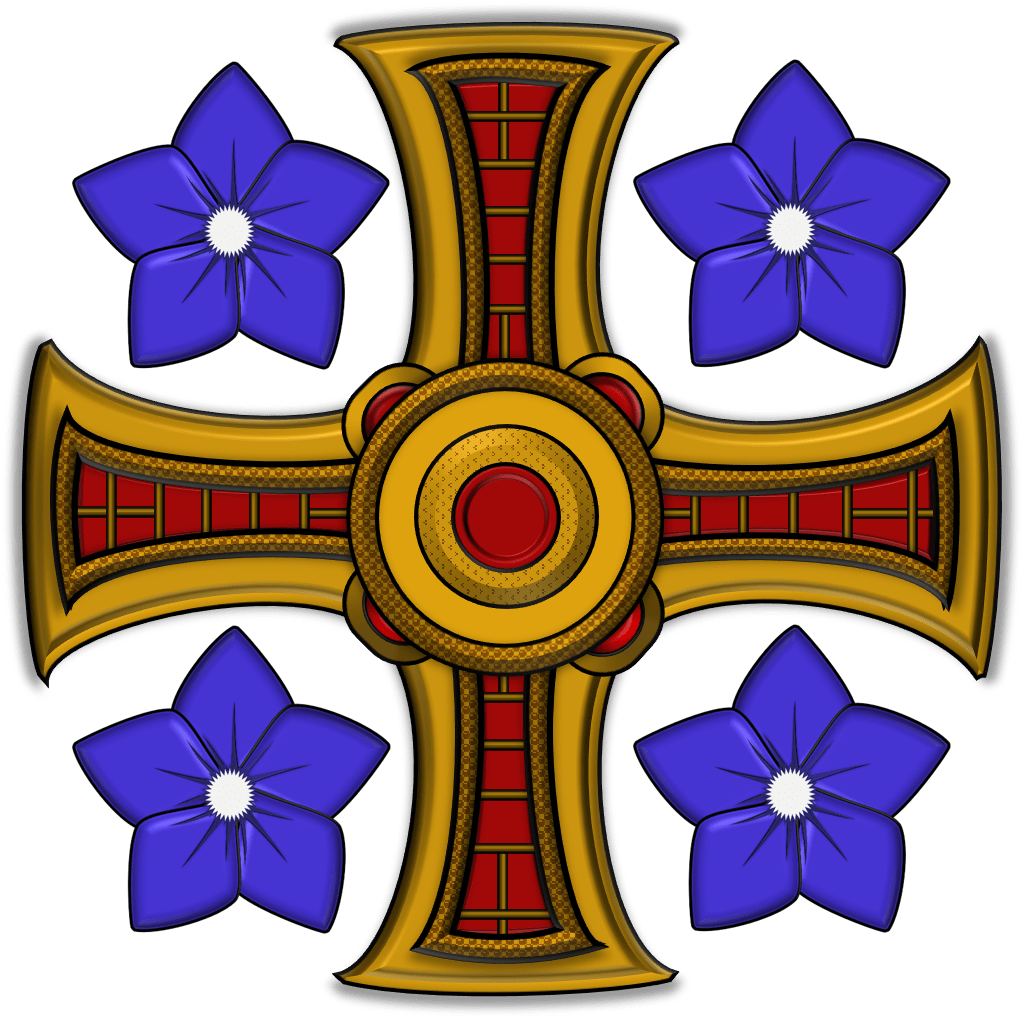
The heraldic badge can be used more widely and so relatives, partners etc. can use the badge and it can be used, say, for any organisation run by any family member. The crest (with the cat) can also be used separately.
This is the official heraldic desciption (blazon) agreed:
Arms: Gules a Cross of St Cuthbert within and pendent from an Orle triple-arched reversed in chief on a Chief triple-arched reversed Or three Spring Gentian Flowers Azure on the dexter base petal of each a Bee wings displayed proper.
Crest: Dormant upon a Stack of two Books the upper spine to the sinister the lower spine to the dexter bound Gules garnished and leaved Or a Cat Sable collared Or.
Badge: A Cross of St Cuthbert Or cantoned by four Spring Gentian Flowers Azure.
Here is my explanation of the arms:
The cross on the shield is known as a cross of St Cuthbert and is based on the cross St Cuthbert had as a bishop, and the original is in Durham Cathedral, my home area cathedral and where I was ordained deacon and priest.
The blue flowers represent Teesdale Gentians, a rare blue flower only found in England in Teesdale, where my formative years were spent. It is the county flower of County Durham, and has happy associations for me.
Bees are one of the symbols of Manchester and are also sometimes used as a symbol of St John Chrysostom – recalling I served St Chrysostom’s, Manchester for many years, a wonderful church.
The black cat as the crest is because family members like black cats and the cat sits on books, because I like books!
The red and yellow / gold colours are found in the coat of arms of my universities – Birmingham and Cambridge.
The motto means much to me, and is central to my understanding of faith. The great Swiss psychologist Carl Jung had it above his home door – Vocatus atque non vocatus Deus aderit – Called, or not called, God will be present.

 A Retired Rector's Reflections
Leave a comment