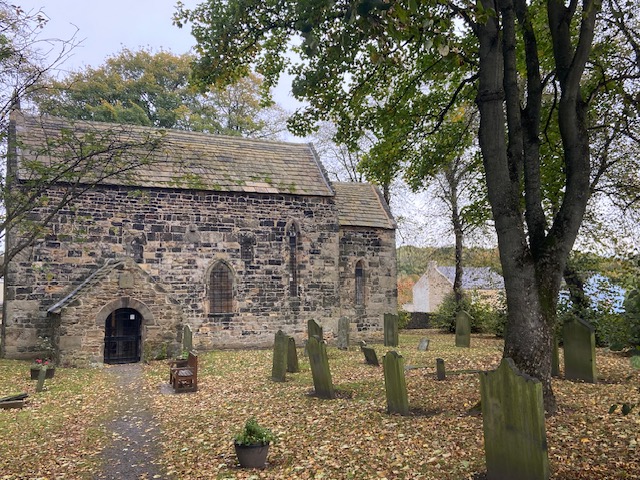
I worshipped this morning at Escomb Saxon Church, England’s most complete Saxon church.
When I retired I considered how I’d go to church. I decided I’d help out from time to time, if asked, in churches which had no clergy at the time – and there are plenty of those. But I’d also find a church not far away to worship in as a ‘member’ – one where I’d sit in the pews and worship alongside others. Escomb is that church for me.
Escomb Church is so different from the lovely late Victorian church in Manchester where I was Rector for over twenty years. That church was wonderfully anglo catholic (daily mass, incense every Sunday, Marian devotions), vibrant, multicultural, ethnically very diverse church with a congregation of 65-80, most under 45, a good number of children and a strong pastoral ministry to the marginalised. I loved it!
Escomb was built about 675 AD, before England as an entity existed, and when people spoke a language unrecognisable today. It is almost purer Saxon, an architectural gem, tiny, simple, and with a small dedicated congregation. It is lovely, too.
There is so much talk about mission, outreach, evangelising and resourcing in today’s Church of England. Statistics are taken, and large growing churches, particulalrly of a certain tradition are held up as successful. I wonder.
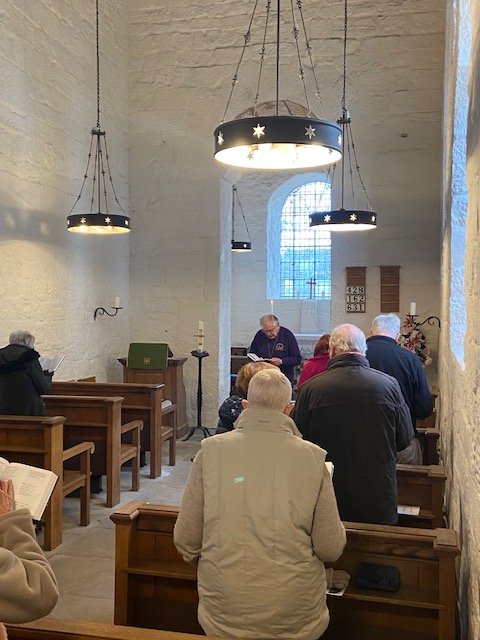
I’d not been to Escomb for a while – I’d been on an extended pilgrimage, and leading worship elsewhere. The welcome I received on going back today was genuine and lovely. I noticed also how two vistors from Saxony, who had come to see the Church were welcomed and drawn in and stayed for worship. The priest who serves the church has three other churches to serve and was not present today. Instead lay members of the congregation led, and we had a good, interesting, and thought provoking sermon from one of the churchwardens.
Not far from Escomb, in a small, mainly elderly, congregation, my faith was nurtured and there, in my teens I received a calling to be a priest. In the Church of England small can be very beautiful, welcoming and inclusive.
As I write this I remember discussing this with an elderly friend who shared a phrase I often repeat. ‘Yes,’ he said, ‘We have to remember a tangerine is not a failed orange, it is something beautiful in itself.’


 A Retired Rector's Reflections
Leave a reply to Kathy Cancel reply