Professor Helen King, Emerita Professor of Classical Studies at the Open University, (and a member of the Church of England’s General Synod) and Andrew Graystone, author of Bleeding for Jesus, who as a survivor advocate, has recently done so much in bringing into the light the horrific abuse of John Smyth, recently held a fascinating discussion.
Considering the disfunctional state of the Church of England the speakers said they see two churches. The first Helen named as ‘Real Church.’ This is the ground level church where the faithful go to church and worship, foodbanks are supported, schools visit, the elderly cared for, and the local church is often held in high respect. Then there is what Helen called ‘Heirarchical Church’ the church of power and privilege, identified as consisting of the House of Bishops, Lambeth Palace, Church House nationally and church houses in dioceses. This second church has become remote and detached, but controlling and holding all the power and money.
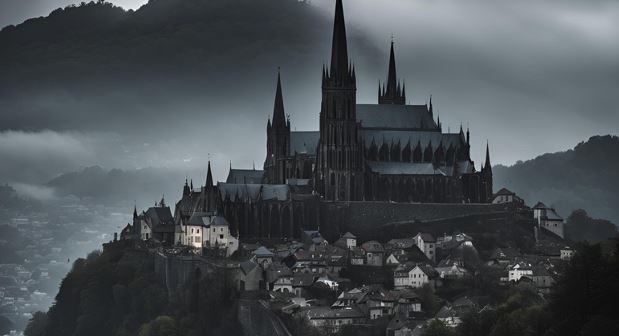
I’ve, elsewhere, referred to what I have found to be the Kafkaesque nature of the Church of England. I have Kafka’s novel The Castle in mind.
A village, in Kafka’s novel, is governed by a bureaucracy which operates from a nearby castle. The villagers hold the castle in high regard although they can’t actually say what the officials do. The castle has masses of paperwork, which although highly praised as efficient is actually at times contradictory and officials are observed secretly destroying some of it in difficult situations.
The Castle, it appears, has in fact several departments who do not appear to know what each is doing. They send out instructions to villagers, usually without explanation, and usually wordy, confusing or contradictory. Villagers never know what happens to their responses to questions and when villagers attempt to communicate with the Castle they encounter a long complex confusing process and communication fails.
At times the extreme degree of the Castle’s bureaucracy and pomposity is almost laughable, but the way the villagers live with it, accept it, and justify it is frightening. They are powerless.
The officials of the castle seem to be all male and they very rarely come to the village. If they do they do not interact with the villagers, except if they need companionship – which is implied to be sexual companionship.
I agree with Andrew and Helen’s analysis of today’s Church of England. The “hierarchical church” for me resembles Kafka’s Castle. Many stories from victims of church abuse show similar experiences of church hierarchy. The issue, of course, is about the structures and cultures, which have evolved, not the individuals who make the bureaucracy who in themselves are often kind and well meaning, like the villagers. The task is one of integration and culture change.
Unfortunately Kafka never completed The Castle. His ending might have helped to change today’s Kafkaesque Church of England.


 A Retired Rector's Reflections
Leave a reply to Church Safeguarding and the mire of incompetency – A Retired Rector's Reflections Cancel reply