One aspect of christian life and practice which I feel churches, especially the Church of England, could help people to explore and develop more is visible expression of faith in the home. Sometimes this can be done by drawing on old traditions and expressing them in ways fitting to life today.
For over twenty years as a parish priest I encouraged people at the beginning of the year to pray for God’s blessing on their homes, those who lived there and those who visited. The ceremony, on or near the Feast of the Epiphany reminds us also of the wise men visiting the home of the Holy Family. The blessing can be done by a simple ceremony which may involve marking the doorway in a particular way using chalk. The chalk may have been previously blessed.
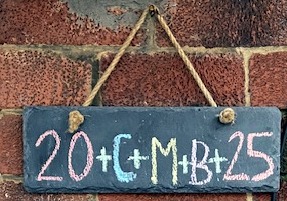
The chalk is used in this way: Using chalk either above the door, outside, or at the side of the door, outside or inside, the markings
20 + C + M + B + 25 are made.
20 and 25 being the year, C , M, B being the initials of the traditional names of the wise men, Caspar, Melchior and Balthasar, they can also stand for Christus Mansionem Benedicat, the Latin words meaning, May Christ bless this home.
Or we may instead make a simple cross mark with chalk +
A prayer for blessing of the home can then be said. Here is one example, there are many others:
Loving God, visit this home and bless it. May there be no evil here. Let your holy angels dwell here and keep all who live here, and all who visit, in peace. May you bless us, and all whom we love, today and for evermore. Amen.
Since retiring I have blessed my retirement house at Epiphany and have a small slate near the door on which I mark the traditional letters. I have been pleased that several people have asked what the marking means. It has started some interesting conversations.


 A Retired Rector's Reflections
Leave a reply to iangomersall Cancel reply