I thoroughly enjoy researching local history, especially when it takes me off on tangents and to unusual places. Recently I had a lovely day visiting the fascinating late medieval beehive dovecotes of Lower Teesdale. They are in lovely, somewhat remote, parts of the lower dale, at Caldwell, Barforth, Gainford, Headlam and Houghton-le-side.
They are in different conditions, that at Houghton-le-side is in very good, restored, condition and still has a roof. The Headlam one is rather ruinous, Barforth’s setting is lovely, Gainford’s, in the Hall grounds, is rather hidden, Caldwell’s, in good repair, is close to the former parish church. All are listed buildings and each has a prominent place in its area and each has its story to tell.
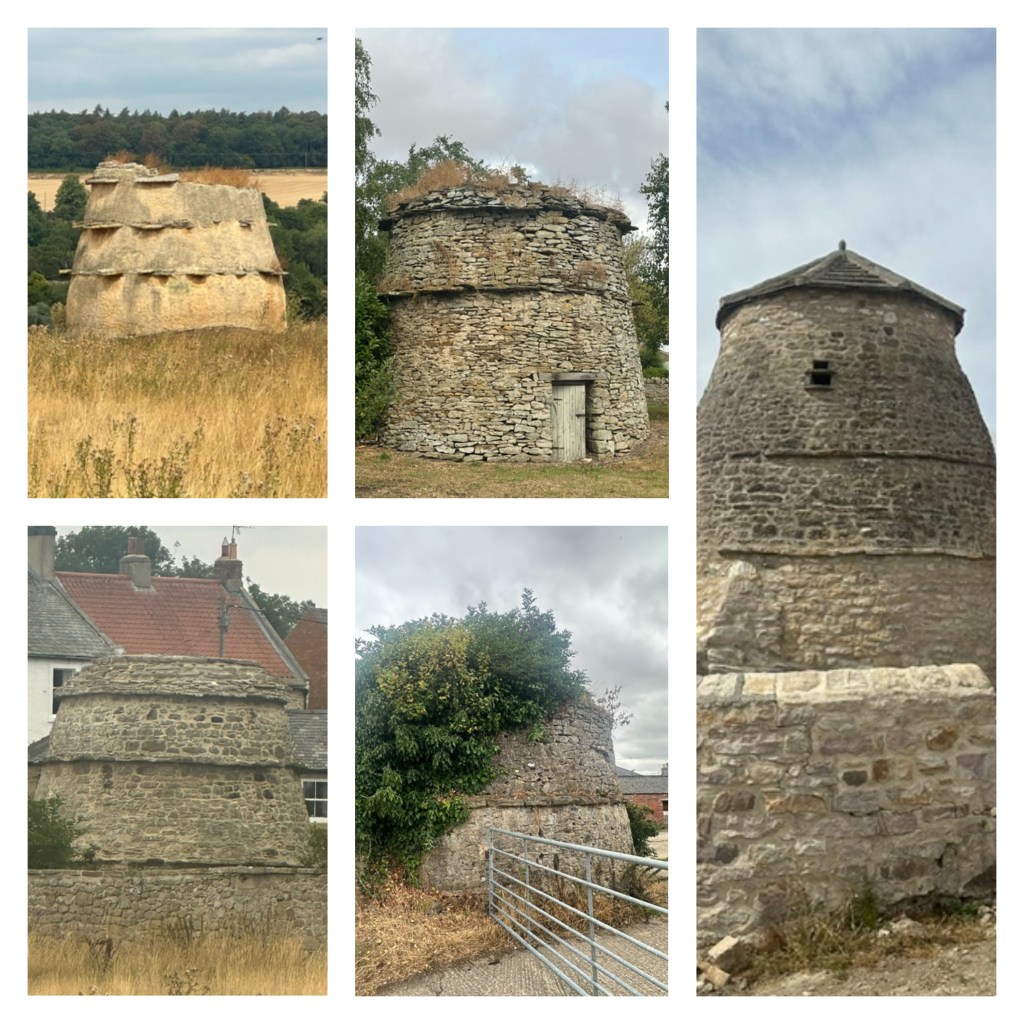
Barforth, Caldwell, Houghton-le-side, Headlam and Gainford.
The five dovecotes have similar appearance and characteristics. They are very big, capable of housing hundreds and hundreds of birds. They are beehive like in design, circular and tapering with stone slate rooves. They date from about the same period. Pevsner’s Buildings of England doesn’t accurately date them, and suggests they are early seventeenth century or earlier. The official listings by Historic England give a similar dating. To me their similarity and relative proximity suggests the same builders were involved in their construction.
Such dovecotes were probably designed to house pigeons, rather than doves. The pigeons and their eggs would be used for food, and their droppings as a valuable source of manure. They were usually built away from trees to discourage birds of prey and vermin, and had crude plastered walls and ledges built in them to prevent rats and other predators gaining access.
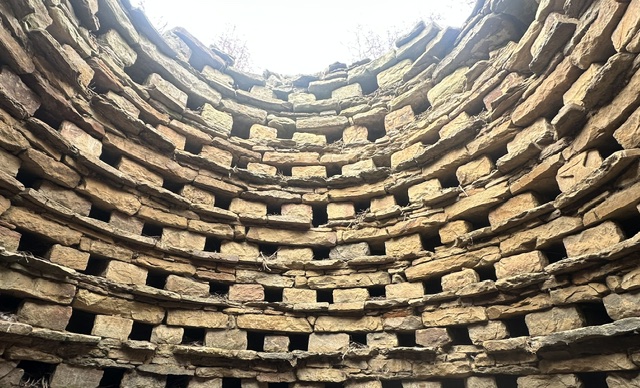
The medieval village at Barforth has long disappeared, all that remains are ruins of the church, a hidden medieval bridge and a splendid dovecote. Although this dovecote has lost its top it still commands a lovely view over the lower dale, and inside can be seen rows and rows of nesting areas.
When in use the dovecotes must have been incredibly busy places for the birds, and for local people. They stand boldly in the landscape today, a witness to a different way of life, and indeed of a rather different diet of the people.


Leave a Reply