I wish the Church of England well in its efforts to address its crisis in safeguarding. A crisis, which I believe is not so much at the parish level, where I see so many parish safeguarding officers taking great care, nor is it often in diocesan safeguarding staff, but rather, primarily, as a result of cover ups, incompetency, and lack of care by bishops and diocesan senior staff. An independent investigation in my own, historic, case of serious abuse by a priest revealed that the bishop involved deliberately covered up the priest’s offence, not even informing a diocese where the abuser was seeking work of serious concerns, and the bishop received the approval of the then Archbishop of Canterbury for this cover up. Then when recently I complained about failure to act to disclosures in Manchester Diocese the complaints procedures were appallingly handled by the Diocesan Secretary and the Bishop.
Personally I believe the Church of England has neither the competence nor the ability to address its serious safeguarding issues. This, I would argue is partly because Its processes are far too slow and cumbersome to even get procedures in place. Above parish level it so much seems to be, as I have written, Kafka’s Church.
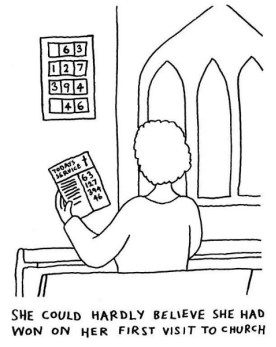
Here is an example from my own experience in Manchester Diocese. About eight years ago I attended a clergy training gathering and happened to overhear a group of clergy talking and laughing about a lay person they knew who was obsessed with numbers and the ‘messages’ they gave. Having some experience with autism, in my family and as a long serving SEND governor at different schools, I suspected the actions they were describing were those of a person with autism and were not to be laughed about but understood.
I don’t criticise the clergy involved, but rather felt they needed information, and training. I wrote to the Bishop of Manchester about this suggesting training on neurodivergence was urgently needed, commenting I felt it related to inclusion and to safeguarding. The Bishop replied saying he had referred my suggestion to the diocesan training officer. That officer e mailed saying he agreed with my suggestion and would take it further. Having heard nothing for over a year I mentioned the lack of action to the Bishop who then referred it to an archdeacon.

Meanwhile I had come across an excellent book produced by Oxford Diocese on this topic, to help clergy and parishes. I emailed the archdeacon pointing this out and suggesting it simply be circulated in Manchester Diocese – I was aware, I said, this sharing of Oxford’s material was being done in other dioceses. The Archdeacon informed me that they would need to consult with archdeacons in Oxford Diocese! I couldn’t see why, so I contacted the Oxford Diocesan Secretary who kindly gave me the name and email address of the author of the book. The same day both the author and the diocesan secretary gave me permission to circulate the work, with minor amendments, for our local area. I informed the Archdeacon of this and was told this would need to be considered by the Diocesan Inclusion Committee. Oh my goodness! Whatever, as I was an area dean at that time I circulated the book which I amended, to clergy and laity of the deanery.
Having heard nothing for a further eighteen months I asked the Archdeacon about progress. I was informed the relevant Committee had not yet got to it as they had a large agenda, and anyway the archdeacon said they personally prefered that it be addressed by training and so – yes, you guessed it, they were referring it to the training department! At this point I despaired and gave in. A friend in the diocese tells me the issue has still not been addressed – eight years on. I wonder which filing cabinet it has been filed away in!

Similarly, on another occasion, years ago, I suggested to the Bishop of Manchester that the diocese have its own local calendar of saints and holy people, to help focus care and prayer. I had done this for several years in my parish with help from parish clergy and laity. Along with the principal saints we had our local observances especially appropriate to our work among victims of trafficking, alcoholics and children as well as saints of the many nationalities within the congregation. Again the Bishop referred the idea on and the same story as with autism resulted, round and round the idea went and nothing came of it.
When I served as Chaplain of a large maximum security prison I made suggestions from time to time to the Prison Governor. He was a gentle and wise man who, as he expressed it, ‘had left the Church of England and now made his spiritual home with the Quakers.’ He carefully noted suggestions and nearly always always responded by smiling and saying ‘Yes, good idea, so what are you going to do about it? Will you need resources perhaps Mr/s X could help you, let them know I suggested it?’ followed up by ‘Will you let me know how progress is going, say in a month’s time?’ Simple as that – delegate, and ideally back to the person suggesting. This was both affirming and enabling. That worked. Kafka’s church seems unable to act so smoothly and crisply.
And so, relating this to the current, larger, issue of safeguarding, many good and sensible thoughts and ideas will be made about safeguarding in the church by synods, bishops, advisers etc. and there will be lots and lots of discussion, argument, and hot air, but until church procedures arer streamlined, and management simplified and bishops become much more accountable I am sad to say I fear ridiculous delays, frustration and anger will be the product, and victims will be further disappointed and hurt.


 A Retired Rector's Reflections
Leave a reply to iangomersall Cancel reply