Not long after I had moved to the North East of England following my retirement I decided to go on a Sunday morning to the Eucharist in an old village church, remote and at a distance from my home. I’d never been in before, and I knew it had several interesting features.
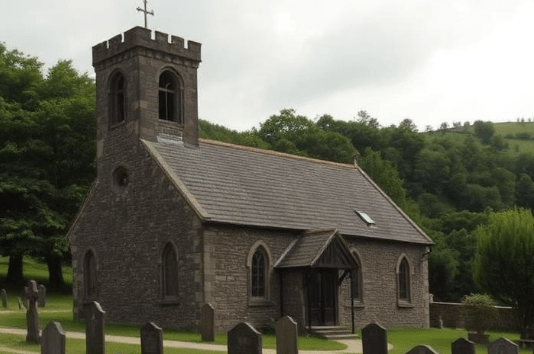
When I arrived I found a small congregation of about ten people. Surprisingly one of them recognised me from years ago, and knew I was a priest. She, and the churchwarden present asked if I would take the service, the Holy Eucharist, as the parish was in a vacancy and the priest that was due had told them a few days earlier that he couldn’t make it.

I was dressed informally, but I was reassured that the vestments available would work. In the end I gave in, and robed and celebrated the Mass. I made it clear I wouldn’t preach as I had nothing ‘up my sleeve.’ Everyone was very grateful and welcoming.
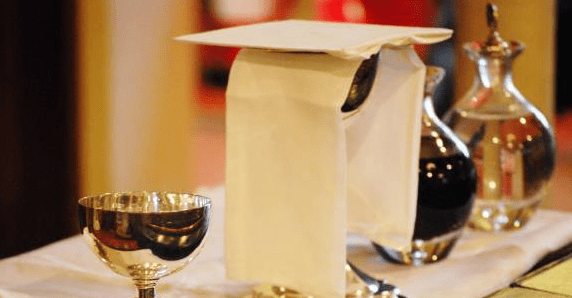
Curiously I noticed that the altar and credence table were neatly set up for a celebration, with the silverware, cruets and linen in place. I thought this odd as the congregation were not expecting a priest. So, after the service, I asked the churchwarden what they would have done if I hadn’t happen to turn up. ‘Oh,’ he said, ‘that happens sometimes. What we do is during the service at the offertory we place the vessels with the bread and wine on the altar, and then we all read aloud the long prayer, and receive communion.’ By the ‘long prayer’ he meant the Eucharistic Prayer (the Prayer of Consecration).’

Well, I thought, that shows great initiative but I wondered what a bishop would say. I know some would greatly disaprove while others would give a more generous response. I also remembered Bishop David Jenkins, former Bishop of Durham once saying in a different context, “Well, we may have got it wrong, but I wouldn’t put it past God to sort it out!”

Reflecting further, I thought why would they do this? It was clear the small congregation had a desire to receive Holy Communion rather than, say, have a “Service of the Word.” They were prepared to take matters into their own hands – a case of rural anarchy, perhaps. I was reminded me of a thought provoking and rhetorical question the great and at times controversial Dutch theologian, Fr Edward Schillebeeckx, once posed for discussion about such actions, in areas severly deprived of priests to celebrate the sacraments: “Which is the greater commandment, the Lord’s ‘Do this in remembrance of me’ or the Church’s regulations about who may or may not lead the celebration of the Eucharist?”

(This is the first in an occasional series I’m blogging giving thoughts on the Church of England ‘from the sideline’)

14 responses to “Lay celebration of the Eucharist?”

  1. gordonbp Avatar

    Interesting. We had a situation where there were 5 churches in 3 (rural) parishes. Our then area Bishop suggested to the incumbent that the Minster model could be used, but was refused “due to theology”! I certainly have taken a number of services with Communion from the Reservation as a Reader…

    Like

    1. jtheunisz Avatar

      The same here. Those services were suddenly ended when the chaplaincy, which was in an interregnum, got a non-local priest in charge, who had previously been a Reader and now decided we should try harder to book visiting priests. I never quite found out why the practice was suddenly discouraged, but I suspect it was because another Reader had been accused of behaving too much like a priest. Apparently they didn’t like the fact that, once in a while, he led services of communion by extension in a few different places. There was nothing illegal about it, because he was always asked to do so, but some clergy may have experienced it as a threat to their “territory”. I am currently writing a book about the priesthood of all believers and the tenacity with which it is sometimes suppressed by over-zealous clergy. The Reader I described quit his ministry and some others took the flight forward and went for ordination, successfully, I might add. I am now one of the very few remaining Readers in the Netherlands. I still have a PTO, but I mainly serve the Old-Catholic Church. And they have also all but banned communion by extension, even though they have a shortage of priests as well.

      Like

  2. Anne Davis Avatar
    Anne Davis

    I’m sure the Lord can indeed sort it out.

    And it would seem very wrong that people are deprived of the Sacrament when sensible provision for Reservation and a service of Word and Communion would solve the problem. But I know many Bishops are suspicious of Reservation.

    However it doesn’t seem to me that the abuses ( or perceived abuses) of the 16th century should dictate the needs of faithful people in the 21st century.

    I have more of an issue with Lay People offering dodgy thoughts on Scripture!!

    Like

  3. Richard Thornburgh Avatar
    Richard Thornburgh

    All power to that parish. We are all a royal priesthood .

    Like

  4. iangomersall Avatar
    iangomersall

    Thank you to Fr Chris Hartley who sends this comment:

    “Necessity is the mother of invention”…I have come to believe that the Holy Spirit can transcend the rules and conformity of the Church. The absence of a priest cannot be allowed to make the faithful bereft of God’s presence with them…there will be extraordinary circumstances which require extraordinary grace to empower God’s people. The same must surely be said of other vehicles of Grace…is bread and wine essential to bring about the presence of Jesus in a real sense? Is baptism by water the only way to receive spiritual rebirth? What of those faithful Christians who don’t believe in the sacraments – is their faith defective in some way? Is baptism by immersion more efficacious than simple “sprinkling”? I find it hard to believe that the Almighty is dependent on such vagaries. I’m not ignoring the importance of ordained ministry, but I am questioning the reliance of Grace being transmitted solely by it; after all Baptism administered by an atheist is valid!

    Like

  5. Christopher Nickol Avatar
    Christopher Nickol

    At the Last Supper, Jesus said, twice ‘Do this in memory of me’. He didn’t say ‘Do this in memory of me, as long as you’re an ordained member of the clergy of the C. of E., or of the R.C.’

    Like

    1. Jonathan Page Avatar
      Jonathan Page

      Neither did he say that the celebrant should hold an enhanced DBS certificate or have completed the appropriate safeguarding training.

      Fr Jonathan Page SCP

      Like

  6. Revd Pat Cox Avatar

    The desire and sincerity of that congregation out weigh any Church of England ruling.

    Like

  7. Peter Laurence Bustin Peter Laurence Bustin Avatar

    The elephant in the room.

    Did they check your safeguarding and PTO…….or are they also above that norm.

    Like

  8. Karen Hawker Avatar
    Karen Hawker

    S

    urely if God approves, it will all be OK, and if he doesn’t, the wafer and wine will stay the same and no harm will be done.

    Like

  9. Paul Hunt Avatar

    There is another option and would be my preferred choice and that is using extended communion (an option our church is prepared for if required) if another church in the benefice has a service. This is also to be preferred to using reserved sacrament. As it is there are several worthy thoughts above to reflect upon.

    Like

  10. David Mitchell Avatar
    David Mitchell

    I think Cs Lewis said communion that should unite all Christians causes more division than anything else… I agree with Christopher nickol’s comment above..

    Like

  11. Christine Avatar
    Christine

    I was once responsible for 12 rural churches. Communion by extension was a beautiful thing. Carrying the sacrament from one central celebration to those who waited in their own parish (with many reasons why they couldn’t travel to the centre). It united us in the one body and was a very moving and spiritual thing.

    Like

  12. iangomersall Avatar

    A large number of comments on this blog post were made on my Facebook feed. I thought it would be good to ‘archive’ many, some understandably edited for length.

    Sam wrote:

    This is interesting!

    What makes me less concerned:

    1 – they wanted a priest to preside if at all possible…

    2 – it sounds like lay concelebration was their in extremis practice, which I think is less problematic than an individual with an undiscerned vocation assuming the role of the priest.

    Sebastian wrote:

    The good people may well have shared an agape, but what they didn’t do was celebrate the Eucharist, the bloodless sacrifice, the re-presentation of Calvary. 

    Laurie commented

    Yes, Ian this is a way forward.

    Very thoughtful, committed congregation.

    Best if not taxed with unwanted publicity though.

    David remarks:

    A good way forward surely could be found, perhaps through Reservation or by Extension. This would keep things ‘lawful’ and maintain the link with the Parish Priest. Better than anarchy, even from the best of motivations.

    Toby comments:

    It’s obviously good that we’ve moved on from only receiving Holy Communion three times a year, but it’s worth asking if we don’t receive too often and in too casual a manner. Our obligation is not receive communion, but to be present at and participate in the celebration of the Eucharist. When you contrast the wonderfully powerful and moving prayers of Samuel Johnson as he prepared to receive the sacrament it’s clear that we have lost something of the importance of that act. The chatter before the service begins, and, all too often, the chatter during the distribution of the sacrament don’t speak well of our sense of reverence and gratitude for this great gift.

    While I commend the faithfulness of this congregation and their desire to share in the eucharist, I regret the sense that they need to do this, especially in the absence of a priest.

    Meg comments:

    This will become more and more of an issue I suspect, as priests become fewer and churches more desperate.

    Trevor comments:

    There is a dilemma here. As clergy are increasingly overstretched in being responsible for an often absurd number of churches, and with bishops and archdeacons often saying “The eucharist isn’t important. Services of the Word are all thst we need” (yes I’ve heard it several times now) it’s heartening that a congregation has more theological ‘nous’ and recognises that eucharistic worship is the ideal. I don’t, however, agree with lay presidency. Perhaps we need more Communion by extension – again, not ideal but maybe the least worse option?

    Brenda says:

    During lockdown one of our clergy team would celebrate at home and livestream. We invited viewers to have and share bread and wine in their homes.. we made it absolutely clear that we were not able to consecrate the elements remotely (but who’s to know what the Spirit can do?). People found it very moving and affirming to share in ‘communion’ remotely.

    I have a very strong sacramental theology, but sometimes we need to be open to ways in which God can mysteriously move.

    Chris comments

    can the devout laity not invoke the Holy Spirit, to consecrate and transform the elements, was Melkizadek an ordained clergyman, of the Catholic or Anglican church, Jesus said, when 2 or 3 are gathered, i am there, no mention of ordination

    Thomas comments

    Situations like this really test the ecclesiological principle fundamental to Patristic theology and its ressourcement that the ‘Eucharist makes the Church’. I see the Eucharist as fundamental to the life and nature of who we are as the Church- we are incorporated into Christ by his body and blood in the Spirit- and through him we share in our eschatological end that of living in communion with the Father. Sadly, the reality of cuts to the clergy in favour of very large ‘mission areas’ don’t appear to rest on this ecclesiology- it seems to arise from something different, perhaps the provisionality of ecclesial structures or placing worship second to mission? The impact of this is seen here, we have a congregation which desires the Eucharist and see its importance but has no priest to celebrate the sacrament.

    Helen adds:

    Situations like this really test the ecclesiological principle fundamental to Patristic theology and its ressourcement that the ‘Eucharist makes the Church’. I see the Eucharist as fundamental to the life and nature of who we are as the Church- we are incorporated into Christ by his body and blood in the Spirit- and through him we share in our eschatological end that of living in communion with the Father. Sadly, the reality of cuts to the clergy in favour of very large ‘mission areas’ don’t appear to rest on this ecclesiology- it seems to arise from something different, perhaps the provisionality of ecclesial structures or placing worship second to mission? The impact of this is seen here, we have a congregation which desires the Eucharist and see its importance but has no priest to celebrate the sacrament.

    Matthew comments:

    Some dioceses (as commented above) sadly make difficulties about “Communion by extension”. It is worth noting that it is only “Communion by extension” if the reserved sacrament is taken from the church in which it was consecrated to somewhere else. The distribution of the reserved Sacrament, by authorised eucharistic ministers, without taking it outside of the church, comes under the normal direction of the clergy and requires no further permission.

    John contributes:

    I’m an Anglican priest and the official position about the nature of the bread and wine is given in the 39 Articles of Religion.

    Article 26 reads:

    “Although in the visible Church evil is always mixed with the good, and sometimes evil has the chief authority in the administration of Word and Sacraments, these men fulfil these functions, not in their own name, but in Christ’s, using His commission and authority to perform their task. Therefore we may use their ministry, both in hearing the Word of God and in receiving the Sacraments. The effect of Christ’s institutions is therefore not removed because of their wickedness, neither is the grace of God’s gifts diminished for those who by faith, and therefore rightly, receive the Sacraments: they are effectual because of Christ’s own institution and promise, even though they may be ministered by evil men.”

    Now, I’m not saying that someone who is not ordained who undertakes the Consecration is ” evil” but in essence this Article basically says that it is not the priest (evil or not!) or any lay person who does the consecration, but Christ.

    Moreover, those who receive communion, in such circumstances are also officially taken care of:-

    From Articles 28 and 29:-

    ” The Body of Christ is given, taken and eaten in the Supper only in a heavenly and spiritual manner. The means whereby the Body of Christ is received and eaten is FAITH.”

    “The Wicked do not eat the Body of Christ in the Lord’s Supper

    The wicked and those who are devoid of a lively faith, may physically and visibly press on the bread with their teeth the Sacrament of the Body and Blood of Christ, but as St. Augustine says, in no way do they partake of Christ. Rather, to their condemnation, they make light of so great and wonderful a mystery.”

    In other words, if a congregation member received the Eucharist he does so in faith alone and it matters diddly-squat who does the service. If they receive Christ in faith, it is Christ they receive.

    So theologically what this congregation did is perfectly sound . But as well as that, the 39 Articles of Religion, which have never been repealed, also confirm it’s soundness officially.

    So what place the priest? Remember that priests are trained in theology and are therefore licensed to preach, and preach with authority. But the main “perk” (if that is what you call it) is the dog collar. Wearing it opens great conversations with people and as such it is a great tool for evangelism. And, as such, is of prime importance.

    Kieran comments:

    It’s an interesting example of successful formation in a parish setting over the last century. People in the same church in 1926 might well have been happy with Matins, so the presence or absence of a priest would have different implications. We now live with the fruit of the parish communion movement (the Lord’s people at the Lord’s table on the Lord’s day), and all that followed through liturgical renewal. The people have been formed for eucharistic worship, and just as that has taken root the well has gone dry for deploying clergy to lead it. One is tempted to reflect on seeds dying in order to bring forth life…

    Peter says:

    That is a very sensible ‘compromise’.

    To have the whole congregation say the Thanksgiving is a good anarchy

    Roger contributes:

    I attend a CofE church plant which has a full time leader. This is specified by the diocese as a lay role, although the leader is ordained but not a priest. We have a ‘proper’ communion service about once a year. There are few stipendiary priests in our deanery, so the established parish churches have their own problems, the retired priests are getting old, and we fear the bishops are about to extinguish Communion by Extension.

    What is the future? Will village churches survive? The bishops and diocesan people keep well clear of our congregations so there is no dialogue.

    Voirrey comments:

    I think their solution is excellent – they share bread and wine together, which is the whole heart of a eucharist.

    Although, reading some of the comments here, I must say that, as a member of a non-conformist church (the URC), I am a little surprised that the Church of England, which celebrates the Eucharist more often than we usually do, does not have any sensible system in place for periods of interregnum, or even when the priest is unable to attend due to severe weather or health reasons.

    We simply have one or two members of the congregation (usually Elders) who are registered with synod as able to take the communion service if there is no minister. As we use, at least in our church, fresh bread this has not, of course been pre-consecrated.

    Keith contributes:

    Rules, rules and more rules. Exactly what Jesus came to cut through. I well understand, and respect the views of those who hold the Eucharist very dear, but I can’t help thinking it might not have been quite what Jesus intended at that last supper. He celebrated the Passover with his befuddled friends, and in one final attempt to give them some kind of understanding of what was going on he told a very neat and physically simple visual parable, using things that were readily to hand. Having just enjoyed a Seder meal together he broke some of the remaining bread to illustrate how he is giving himself to be broken for the benefit of others. He poured wine to demonstrate the outpouring of his life for the benefit of others. His friends were, and now we are, expected to follow Jesus’ example and to submit ourselves to be broken for others, and to pour out ourselves for others. He added that his friends might remember him when celebrating the Passover without him in subsequent years until the time came for them to celebrate together in the world/life to come. Anything beyond that is of man’s invention and often flawed understanding. Centuries of tradition have seen a simple, but profoundly deep spiritual act develop into a complex ritual hedged around with so many “musts” and ” must nots”. Sadly, for some, the ritual seems to have become more important than the day to day following of Jesus by trying to live for the benefit of others. Jesus surely did not come to invent the communion service, nor even to start a new religion, but to demonstrate a way of life that would bring us closer to God and each other without having to adhere to a set of complicated rules.

    Like

Leave a comment

Welcome to a retired rector’s reflections. My name is Ian Gomersall, and I’m a retired Anglican priest living in the North East of England. Here, I share my thoughts on a variety of things which interest me, some delight me, some anger me, and many are passing thoughts.

Thank you for being here, and I’d welcome your comments on thoughts through the comments box after a post.

Let’s connect