In 1984 an academic researcher sent out twenty students individually to differing rural parish churches. They were to attend Sunday worship in its different forms and report back on their findings. Their investigations form a fascinating chapter in a now forgotten work Rural Anglicanism.
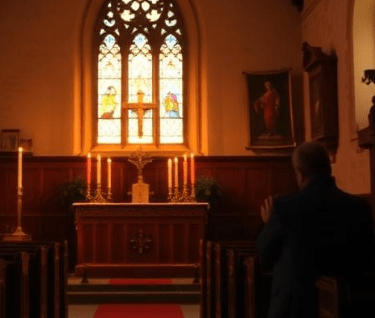
‘Hilary’ chose to attend Evensong at ‘Batsford.’ She discovered she was one of two in the congregation. The priest led the service with care and devotion, and Hilary felt welcomed by the other congregant who sat next to her, and by the careful welcome of the priest. Despite being only three people hymns were sung and the psalms were gently sung to plainsong. The service concluded with Benediction of the Blessed Sacrament. Hilary left feeling welcomed, and and in no doubt of the ‘sincerity and sanctity’ of the priest and act of worship in which she had taken part.
Personally I find Hilary’s account of this gentle quiet Evensong moving, and it clearly made an impression on her. I recall a similar experience as an ordinand finding my way in the variety of Anglo Catholicism. I attended Vespers and Benediction in Small Heath, Birmingham one summer Sunday. I was the only member of the congregation, although during the service a tramp came in and rested at the back of church. The priest took care to welcome me and make me feel comfortable. He led the service very devoutly and I had a strong sense that God’s love embraced us and that Christ was present in the two or three gathered in his name.
Years later, as a parish priest, I often appreciated and was strengthened by acts of worship attended by a small number. I was also aware that some people chose to come only to such acts of worship.
Such gentle quiet services have been part of the provision in anglican worship through its history. I feel sure many have appreciated this, by attending, or indeed by not attending but knowing it is happening.
Today where can such services be found in parish churches?
Now, in retirement, I have to say I seldom if ever find this option of public worship. Some clergy tell me they used to have an afternoon or evening service ‘but no one came.’ I wonder. Was the aim to have a certain number attend, or was it to have a fixed time when the church was open, the bell ring and worship offered irrespective of the number attending?
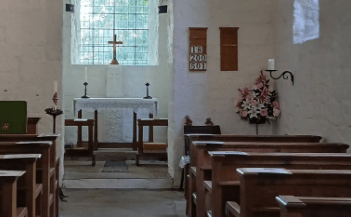
I hope, and pray, that churches will see once again the beauty of two or three ( perhaps laity only) gathering at a fixed, advertised, time each week, on a Sunday or weekday, to pray the prayer of the church. Who knows – a Hilary, or an ordinand or a tramp may come in and feel welcomed and spiritually enriched and remember it for the rest of their lives.


Leave a Reply